Türkçe
 Русский
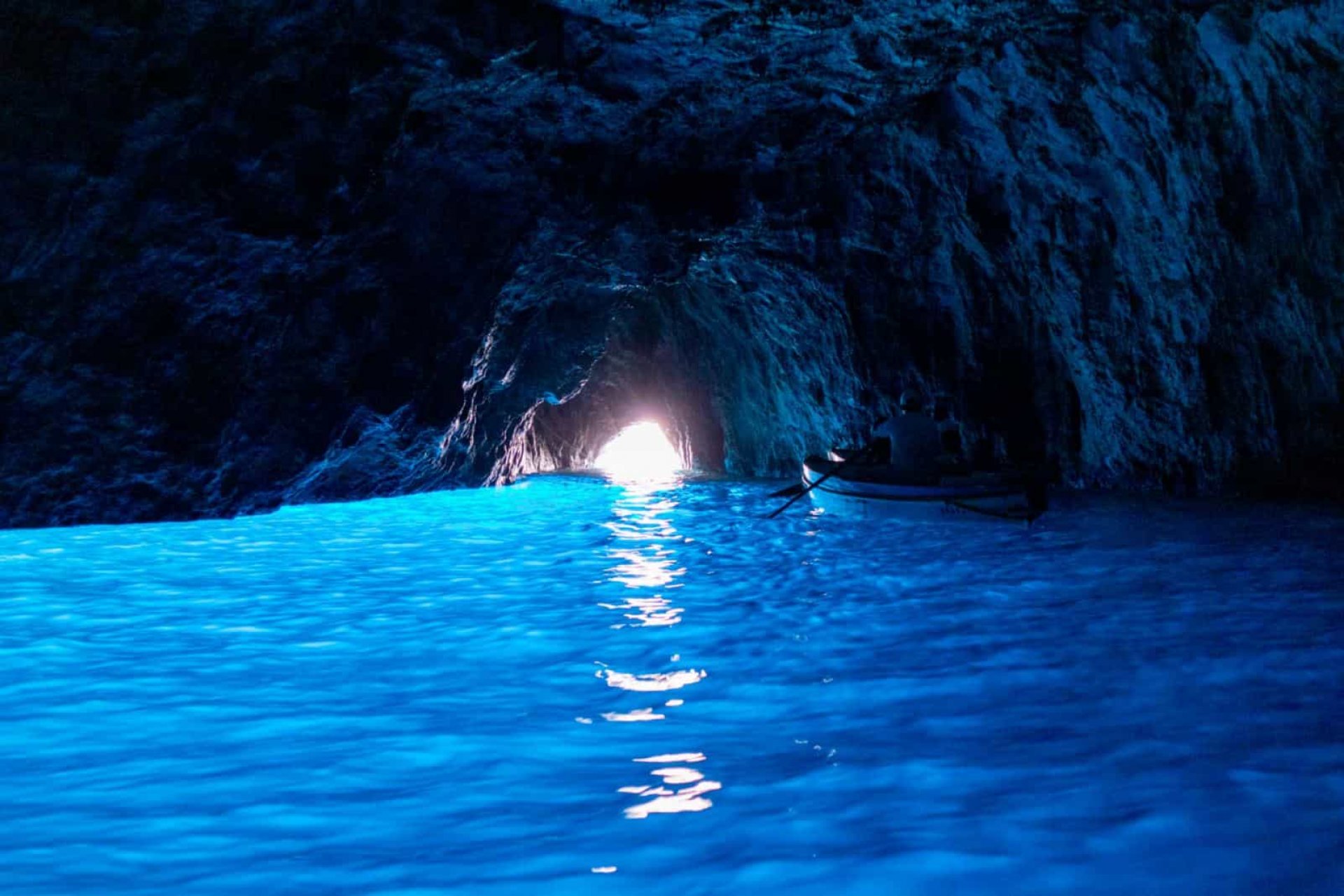
The Blue Cave is located 18 km from Kaş and 6 km from Kalkan
in Antalya. It is also approximately 600 meters from Kaputaş Beach. Discovered
in 1972 by geologist Dr. Temuçin Aygen, the Blue Cave is 40 meters wide, 15
meters high, and 50 meters long. It is a large cave with various channels and
chambers.
The cave gets its name, "Blue Cave," from the blue
light that enters from the sea. The blue of the water, combined with sunlight,
takes on a phosphorescent appearance, extending into the cave. Schools of
shrimp can be seen in both winter and summer. The depth and structure of the
cave are also very suitable for diving. Tours are organized to this area by
private boats, and there are no restrictions on visiting hours or days.
How to Get to the Blue
Cave?
Every day, over a hundred visitors come to the cave to dive.
The sun reflecting on the sea creates a phosphorescent hue, carrying the
clarity and blue of the water into the cave. In the past, it was a cave that
housed seals. However, nowadays it has become a place visited by tourists via
boats. So, how do you get to the Blue Cave? The only way to get to the Blue
Cave is by sea. You can reach this area by boat tours, taking a boat from Meis
harbor to Kalkan, and it takes 15 minutes. You can also come to the cave for
free at any time of day with a boat you rent yourself.
Where is the Blue Cave
in Kaş?
It is a cave located in the Kaş district of Antalya.
Situated on the coast between Kalkan and Kaş, the Blue Cave is 6 km from Kalkan
and 18 km from Kaş. It is also quite close to Kaputaş Beach.
Places to Visit in the Blue Cave
There are many places you can visit and see very close to
the Blue Cave. You shouldn't leave without visiting these beautiful places that
can fascinate you with their history. We will briefly give information about
the places to visit in the Blue Cave, where you can create beautiful memories
and take impressive photos.
1. Antiphellos Ancient
City
The ancient city of Antiphellos, now called the Ancient City
or Ancient Theatre, is located in the Kaş district of Antalya. One of the most
important port cities of Lycia, Antiphellos has an ancient settlement. Phellos
means "stony country." It is known to have been the port of the
ancient city of Pellos, located to the north, dating back to the 6th century
BC. During the Hellenistic period, commercial ventures gained importance in
this region, and Antiphellos developed more rapidly in response to the decline
of its main city, Phellos. It was also the most important port city during the
Roman Empire.
2. Xanthos Ancient
City
Located between Kaş and Fethiye in Antalya, Xanthos was
historically used as an administrative center in the Lycian League. The ancient
city of Xanthos is built on two hills between Muğla and Antalya. It was also
called a port city due to its proximity to the sea. Here, there are many ruins
that bear witness to history, including sarcophagi, rock tombs, and pillar
tombs belonging to the Lycian culture.
3. Kekova Island
Kekova Island, called Dolichiste in the Lycian language, is
a small rocky island located off Üçağız and Kaleköy near Demre district of
Antalya. On the northern side of the island, there are some sunken remains of
the ancient city that was destroyed in an earthquake in the 2nd century. It is
also 1 kilometer away from Kaleköy. Kekova Island encompasses Üçağız and
Kaleköy villages and four different ancient cities: Simena, Dolichiste,
Aperlai, and Theimiussa.
4. Patara Ancient City
Located at the southwestern end of the Xhandos Valley,
between Fethiye and Kalkan, Patara Ancient City is one of the important and
very old cities of Lycia. Patara, an ancient city where excavations have been
ongoing since 1988, has become an important place not only for its historical
and archaeological value but also because it is one of the rare beaches where
Mediterranean sea turtles (Caretta-Caretta) have laid their eggs and hatched
their young for millions of years. The city's name appears as "Patar"
in Hittite texts from the 13th century BC.
5. Kaleköy (Simena)
Simena is known as a small Lycian coastal city. Dating back
to the 4th century BC, Kaleköy is a small village built on the site of an
ancient city belonging to the Lycian League. When you arrive in Kaleköy, you
need to explore it on foot, as the village is closed to traffic. The roads are
narrow and winding, making it impossible for any vehicle to enter.
Beaches Near the Blue Cave
Located between two natural beauties, the Blue Cave is also
described as the Blue Pearl. Beaches near the Blue Cave include Ölüdeniz Beach
above the cave, and Kabak Beach and Butterfly Valley below. It is also located
in a very easily accessible location. It is particularly close to many beaches
in areas such as Kalkan and Kaş.
Blue Cave What is the
Feature of the Blue Cave?
The Blue Cave is a place formed by the erosion of the
coastline by wind and sea. Another name for this cave is the Cold Water Cave.
The clear water in the sea and inside the cave is quite cold. For this reason,
it is called the "Cold Water Cave." Its cooling effect and the unique
harmony of the scenery come together. The Blue Cave, formed naturally and
giving the feeling of an indoor pool, captivates everyone. Also, the
single-celled seaweeds in the area reflect the blue color of the water.
Therefore, it is called the "Blue Cave."
Camping Areas in the Blue Cave
The Blue Cave is a very suitable place for camping because
it has its own coastline. If you come to the cave by boat tour, you can camp
for one night and return the next day with another boat tour. To get here, you
need to rent a boat or join a boat tour. Many people come to the Blue Cave
camping areas to enjoy the unique clarity of the water, even if only for a day.